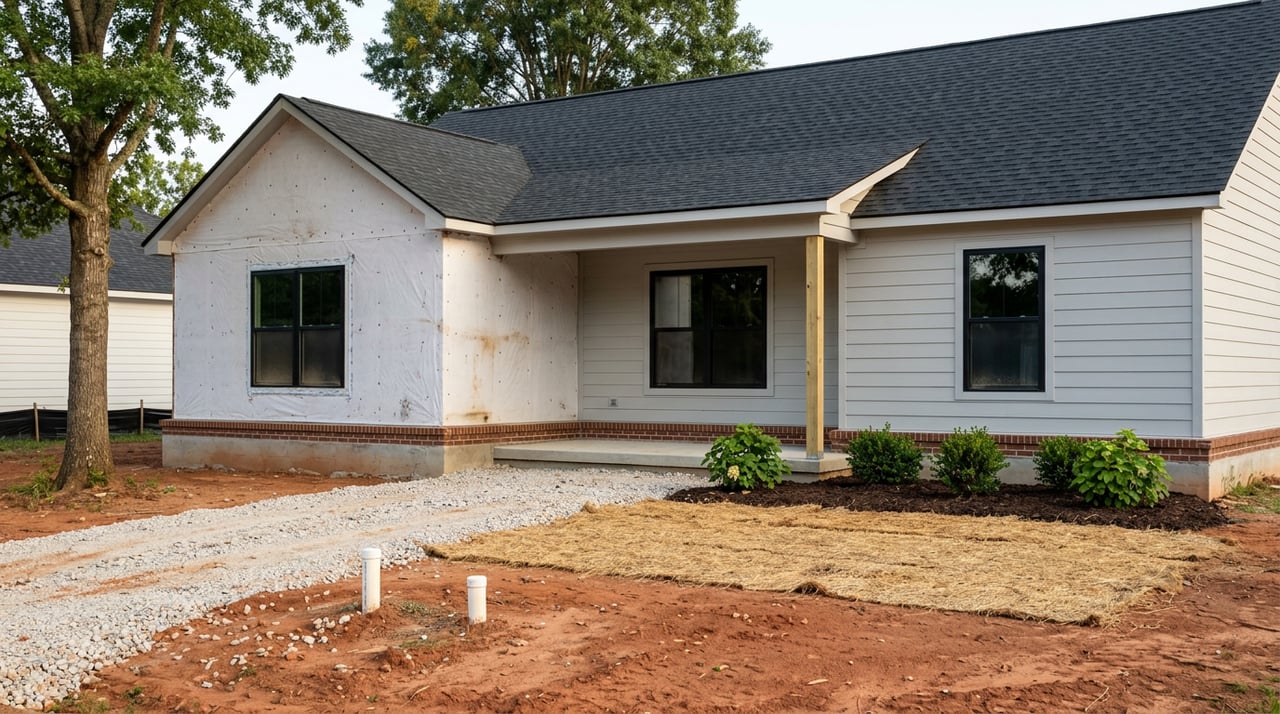
Thinking about buying land or building a new home in Caledonia 39740? The right parcel can give you space, privacy, and a home tailored to your life, but only if you confirm utilities, permits, and site conditions up front. In this guide, you’ll learn the local rules, who to call, which tests to order, and how to finance a new build in and around Caledonia. Let’s dive in.
Start with location basics
Before you fall in love with a lot, confirm whether it sits inside the Town of Caledonia or in unincorporated Lowndes County. Town parcels follow town permits and often have access to municipal utilities. County parcels follow the Lowndes County Unified Land Development Code, which sets zoning, access, subdivision, and floodplain rules.
- Review county standards in the Lowndes County Unified Land Development Code.
- For in-town permitting and services, start at the Town of Caledonia website.
Confirm what you can build
Zoning controls your permitted uses, setbacks, and home type. Ask the county planning office for a zoning verification letter for county parcels, and confirm any overlays or special districts that may affect height, lighting, or noise.
If a parcel is in a Special Flood Hazard Area, additional approvals and elevation or mitigation may be required under county floodplain rules. The ULDC outlines standards and submittal requirements. When in doubt, verify early with county staff.
Plan utilities early
Utility access can make or break a land purchase. Get written serviceability statements and estimated fees from each provider before you make an offer.
Water and sewer
Inside town limits, confirm if the lot has access to municipal water and sewer. Ask about main locations, tap fees, and any cost to extend lines. The utility posts forms and the annual water-quality report at the Caledonia Water and Sewer Department.
If sewer is not available, you will need an on-site wastewater system. See the septic section below for the testing and approval process.
Natural gas
In town, the Caledonia Natural Gas District can confirm main proximity and tap fees. Call or visit the Caledonia Natural Gas District to check availability and timelines.
Electricity
Electric service in the Caledonia area is typically provided by local cooperatives. Coverage varies by street. Some parcels are served by Monroe County Electric, while many county areas are served by 4-County Electric Power Association. Use local listings to identify likely providers and confirm line-extension policies and lead times. For 4-County details within the TVA system, see 4-County Electric Power Association’s TVA page and the town’s local businesses directory.
Ask each provider about membership or connection fees, transformer needs, and any contribution-in-aid-of-construction if new lines are required.
Internet and fiber
Broadband options vary by street and include co-op fiber initiatives and commercial providers active in the Golden Triangle. Request a current service map and expansion plans. The town’s local businesses directory is a good starting point for provider contacts.
Septic and well essentials
Septic feasibility
If public sewer is not available, you will need a site evaluation for an on-site system. A certified evaluator or county sanitarian will review soils, slopes, and groundwater to determine system type and layout. Mississippi’s rules, forms, and certified installer requirements are outlined by the Mississippi State Department of Health.
Expect that a high water table or marginal soils can require more advanced systems. Budget for the evaluation as a purchase contingency so you can confirm feasibility before you close.
Private well planning
When public water is not available, a licensed driller can help you estimate depth, likely yield, and treatment needs. Costs vary by geology and water quality. For preparation and testing guidance, see MSU Extension’s well readiness resource.
Access, driveways, and easements
Road access is more than a driveway. County standards address driveway location, sight distance, and culverts. If the lot fronts a state highway, you may also need a state access permit. For county standards and floodplain rules, refer to the Lowndes County ULDC.
Order a title search to check for recorded access easements, utility easements, pipeline rights of way, and any covenants or restrictions that affect where you can build. Records are maintained by the Lowndes County Chancery Clerk.
Permits and the build process
Here is a practical sequence for buying land and building in 39740.
1) Due diligence before you offer
- Pull deed and easement history with the Chancery Clerk.
- Do a preliminary flood check and ask the county about any floodplain requirements.
- Review county standards in the ULDC and confirm allowed uses.
2) Feasibility during the contract period
- Order a soil and site evaluation to confirm septic type and drainfield area if no sewer is available. MSDH publishes the process and forms.
- Get a well feasibility estimate if you will need a private well. MSU Extension provides testing and maintenance guidance.
- Obtain written statements from utilities on service availability, tap or connection fees, and any line-extension costs.
3) Plans and permits
- Submit building plans for permits to the town if inside town limits, or to Lowndes County if in the unincorporated area. The ULDC details submittal and inspection requirements.
- Apply for septic permits through MSDH if applicable, and for any floodplain or driveway permits required.
4) Install services and build
- Submit separate applications for water or sewer, electric co-op service, natural gas, and broadband.
- Confirm timelines for line extensions, transformers, or meter sets so they align with your construction schedule.
5) Final approvals
- Schedule final inspections and obtain a certificate of occupancy.
- Ensure septic installers file required affidavits or maintenance agreements for advanced systems with MSDH.
How long it takes
Timelines vary by lot and scope. These are typical ranges you can plan around:
- Due diligence and closing on land: 2 to 8 weeks.
- Soils testing and survey: 2 to 6 weeks based on scheduling.
- Permitting and utility approvals: 4 to 12 or more weeks, longer if floodplain or subdivision reviews apply under the ULDC.
- Site work and utility installs: several weeks to a few months.
- Home construction: often 6 to 12 or more months depending on design, weather, and subcontractor availability.
Financing your build
Most buyers use one of these options:
- Land-only loan. Used to buy the lot first. Expect higher rates and down payment than a standard mortgage. Lenders may require a new survey and limit loan-to-value.
- Construction-to-permanent loan. A single loan that funds construction draws, then converts to a long-term mortgage at completion. You will need a builder contract, detailed budget, and schedule.
- USDA Rural Development programs. In eligible rural areas, certain USDA programs can help finance land plus a new build. Local lenders can explain eligibility and how construction funds are disbursed.
What lenders typically ask for:
- A signed builder contract and itemized budget with a build schedule.
- A plot survey and site plan showing the house, driveway, and septic area if needed.
- Evidence of feasibility for septic and well, or public water and sewer availability.
- Proof that permits are obtainable based on zoning and ULDC standards.
Cost drivers to watch
Surprises usually come from site work and utilities. Plan for these:
- Septic system type. Conventional gravity systems are usually less costly. Marginal soils or high groundwater can require mound or advanced treatment units. See MSDH guidance on on-site wastewater rules and approvals at the MSDH site.
- Well depth and treatment. Drilling and any filtration or disinfection equipment add cost. MSU Extension outlines planning and testing steps at its well readiness page.
- Electric line extensions. Remote parcels may need new poles, a transformer, or a contribution toward construction. Start early with your co-op. For 4-County contact context in the TVA system, see 4-County’s TVA listing.
- Driveway and culvert work. County standards address culvert size and sight distance. Factor materials and any permits into your budget.
Make an offer with smart contingencies
Protect your purchase by making closing contingent on key checks. Use the period between contract and closing to confirm buildability.
- Title search for easements, covenants, and mineral rights at the Lowndes County Chancery Clerk.
- Written confirmations from utilities on serviceability, tap or connection fees, and any extension costs from the Caledonia Water and Sewer Department and your electric or gas providers.
- A soil and site evaluation for septic per MSDH on-site wastewater rules.
- A well feasibility estimate if needed, guided by MSU Extension’s recommendations.
- A zoning and floodplain review under the Lowndes County ULDC.
Local first calls
If you are evaluating a specific parcel in 39740, start here:
- Town Hall, Town of Caledonia for in-town permits and service questions. See the town website.
- Caledonia Water and Sewer for water and sewer boundaries, tap fees, and service timelines at the utility site.
- Caledonia Natural Gas District for mains and taps at the district site.
- Electric providers to confirm who serves the parcel and any line-extension policies. Start with the town’s local businesses directory and the 4-County TVA listing.
Ready to compare lots or tee up your due diligence? Reach out to the team at Delta-Gulf Real Estate Corporation for local guidance, parcel vetting, and coordinated next steps with utilities, evaluators, and lenders.
FAQs
What should I check first when buying land in Caledonia 39740?
- Confirm whether the parcel is inside town limits or in unincorporated Lowndes County, then review the ULDC and call the town or county to verify permitted residential use.
How do I know if a Caledonia lot has public water or sewer?
- Ask the Caledonia Water and Sewer Department for a written serviceability statement that shows main locations, tap fees, tie-in requirements, and any cost to extend lines.
Who provides electricity to rural parcels near Caledonia?
- Electric service is often provided by Monroe County Electric or 4-County Electric; use the town’s local businesses directory and the 4-County TVA listing to identify and contact the correct provider.
What permits are required to build in Lowndes County versus inside town?
- Inside town limits, apply through the Town of Caledonia; outside town, follow the county process under the ULDC, plus MSDH septic permits if needed and any floodplain or driveway approvals.
How long does a new build usually take in the Caledonia area?
- A typical path runs 2 to 8 weeks for due diligence and closing, 4 to 12 or more weeks for permits and utility approvals, then 6 to 12 or more months for construction, depending on scope and season.
