Thinking about buying your first rental property in Starkville? You are not alone. With a renter-heavy housing base, a major university presence, and a mix of housing types, Starkville can be a practical place to start if you plan carefully. The key is to understand what drives demand here, what the city requires, and how to match the right property to the right tenant. Let’s dive in.
Why Starkville attracts rental investors
Starkville has long functioned as a college town, and that shapes the rental market in a big way. Mississippi State University enrolled 23,563 students in fall 2025, and it is also one of the city’s largest employers with 5,900 employees. Other major local employers include Starkville School District and Oktibbeha County Hospital, each with about 650 employees.
That mix matters because rental demand is not coming from one group alone. In addition to students, the market can include faculty, staff, healthcare workers, and service employees. Nearby colleges in Columbus and the Golden Triangle also help widen the regional tenant pool.
Another important data point is homeownership. Census QuickFacts shows a 33.9% owner-occupied housing rate in Starkville, which points to a renter-majority market. The same source lists a median gross rent of $916, which gives you a useful starting benchmark when you begin comparing opportunities.
Start with the tenant, not the property
One of the most common mistakes new investors make is falling in love with a property before thinking about who will rent it. In Starkville, your best results usually come from choosing a property that fits a likely tenant profile. That means your first question should be, “Who is this home most likely to serve?”
A unit near campus may appeal to student renters or university employees. A detached house in another part of the city may be better suited to a longer-term household or local worker. If you start with the tenant profile, your rent estimate, repair plan, and leasing strategy usually become much clearer.
Compare property types carefully
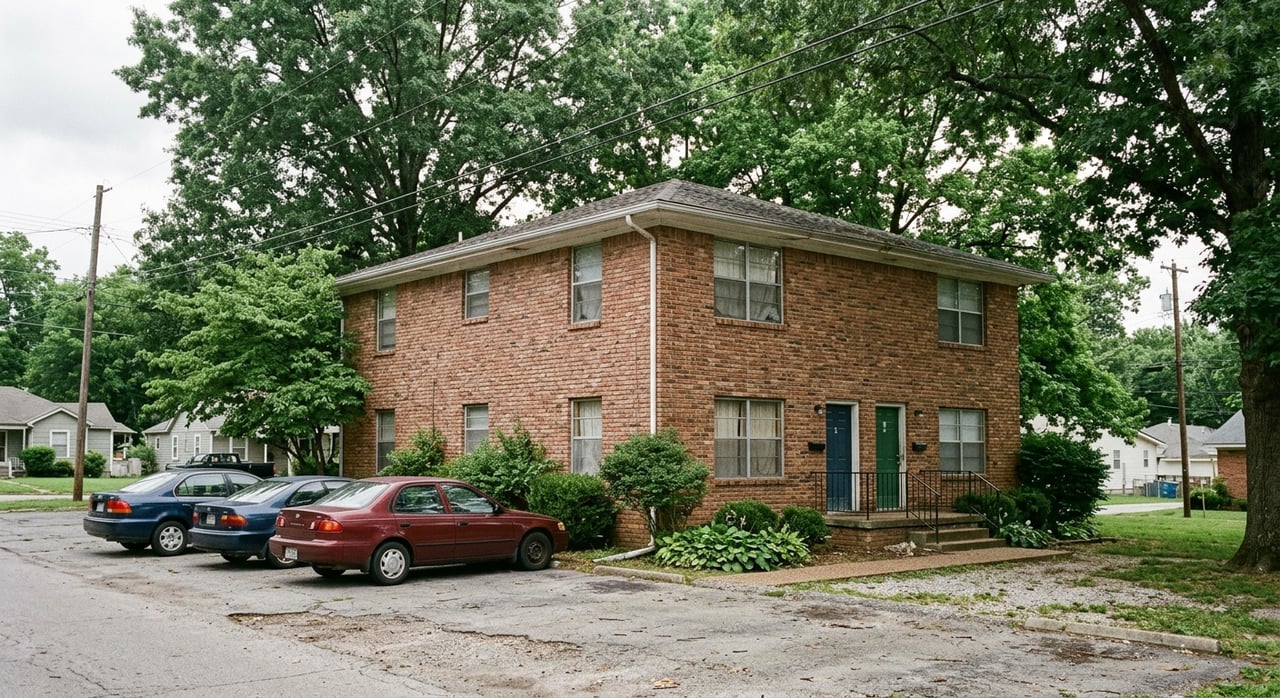
Starkville’s rental housing rules apply to a broad range of long-term rental units. City forms specifically reference single-family houses, apartments, condos, duplexes, and 4-unit buildings. That gives first-time investors more than one path into the market.
Here is a simple way to think about the options:
| Property type | Possible fit | What to evaluate |
|---|---|---|
| Single-family house | Longer-term tenants or small households | Maintenance needs, yard upkeep, lease stability |
| Duplex | Households seeking more space with lower entry cost than larger multifamily | Shared systems, turnover costs, rent split by unit |
| Small multifamily | Investors wanting multiple income streams | Inspection readiness, repairs, management complexity |
| Condo or apartment-style unit | Tenants seeking convenience and lower-maintenance living | Association rules if applicable, unit condition, rent comps |
The right choice depends on your budget, your management style, and your goals. A first-time investor who wants a simpler start may prefer a straightforward single-family rental. Someone focused on scaling income may look more closely at duplexes or small multifamily properties.
Know the difference between long-term and short-term use
This is an area where local rules matter. Starkville’s rental housing code applies to long-term rental housing units, and the city makes a clear distinction between long-term rentals and short-term lodging. That means a property that works well as a long-term rental may not fit a short-term strategy.
If your plan is buy-and-hold investing, this can actually simplify your thinking. Instead of chasing multiple use cases, you can focus on stable long-term demand, realistic rents, and compliance with the city’s rental housing process.
Use rent data as a range, not a promise
Rent is one of the easiest numbers to oversimplify. Starkville’s median gross rent is $916, but that should be treated as a starting point, not a pricing rule. Other current market trackers show a wider spread, including average apartment rents around $822 and 3-bedroom averages around $1,614.
That gap tells you something important. Unit size, condition, and location can change the picture fast. A clean, updated property in a strong rental location may perform very differently from an older unit that needs work.
For that reason, broad city averages should never be your only source. Before you make an offer, ask for neighborhood-specific rent comparisons so you can underwrite the deal using realistic local numbers instead of a single headline statistic.
Budget beyond the mortgage payment
Cash flow looks very different once real expenses are added in. In Mississippi, property taxes are ad valorem, which means they are based on value, assessment ratio, and local millage. The Mississippi Department of Revenue states that single-family owner-occupied residential real property is assessed at 10%, while all other real property is assessed at 15%.
That distinction matters because a rental property will not be taxed like an owner-occupied home. County, municipal, and school district millages can also apply, so your tax estimate should be specific to the property you are evaluating.
You should also plan for the normal cost buckets that affect long-term rentals, including:
- Property taxes
- Insurance
- Vacancy
- Repairs and maintenance
- Turnover cleaning
- Property management
- Permit costs for renovations
- Code-compliance work
If you ignore these items, a deal can look better on paper than it really is. Conservative assumptions usually serve first-time investors best.
Pay attention to Starkville tax timing
Property tax timing can affect your closing costs and first-year cash needs. Oktibbeha County says tax bills are typically mailed in the last week of October. Taxes are due on or before February 1 for the preceding tax year, and partial payments are allowed from November 1 to February 1.
If you are buying near the end of the year, this timing becomes especially important. You will want to understand how taxes are being prorated at closing and whether a bill is coming due soon after you take ownership.
Treat city compliance as part of due diligence
In Starkville, compliance is not something to figure out after closing. The city says that anyone operating long-term rental housing within city limits must register the property, pay a $15 per-unit fee, and obtain both a rental housing license and a privilege license. Hotels, motels, short-term rentals, and bed and breakfasts are excluded from this process.
The city also states that the applicant must be the owner, agent, or manager with authority to consent to inspections. Unregistered units can face enforcement action and possible certificate-of-occupancy revocation. For a new investor, that makes code status just as important as rent potential.
Review the inspection checklist before you buy
Starkville’s inspection checklist is a useful tool even before you own a property. It covers exterior condition, roof and porches, kitchen function, electrical service, GFCI protection, heating, window and door weatherproofing, smoke detectors, and general safe-habitability items.
That gives you a practical framework for evaluating risk during showings and inspections. If a property has multiple visible issues in these areas, your repair budget may need to be much larger than expected.
A smart approach is to treat the city checklist like a pre-closing screening tool. It can help you spot properties that may look affordable up front but require more work to become rent-ready.
Understand permits before starting renovations
If your first rental needs updates, do not overlook the city’s building process. Starkville’s Building Division reviews plans, issues permits, conducts inspections, and issues certificates of occupancy. The city says permits must be obtained before construction begins.
That is more than a technical detail. Work done without a permit can be billed at triple the permit cost. The city also uses the 2024 International Residential Code and related adopted codes, which means your rehab scope should be planned with compliance in mind from day one.
Know the lease framework in Mississippi
Mississippi’s Residential Landlord and Tenant Act applies to most residential leases entered after July 1, 1991. The law requires good faith and does not allow statutory rights to be waived in a rental agreement. If you are planning to self-manage, this is one more reason to review lease language and default procedures carefully.
For many first-time investors, this is where local support becomes valuable. A strong team can help you avoid preventable mistakes before you close and before you place your first tenant.
A practical first-rental workflow
If you want a simple roadmap, start here:
- Define your target tenant. Decide whether the property is best suited for students, university staff, healthcare workers, or another local renter group.
- Pull realistic rent comps. Use neighborhood-specific comparisons instead of relying only on citywide averages.
- Check code and license status. Confirm what is needed for registration, inspection readiness, and licensing.
- Estimate repair scope early. Use the city inspection checklist as a guide before you finalize your numbers.
- Verify property tax treatment. Make sure your tax estimate reflects rental classification, not owner-occupied assumptions.
- Budget reserves conservatively. Include vacancy, repairs, turnover, insurance, and management.
- Line up your local team. A broker, lender, inspector, and property manager can help you make a more informed decision.
This process may feel slower, but it can save you from expensive surprises. In a market like Starkville, local details matter.
What a smart first step looks like
Your first rental property does not need to be perfect. It needs to be understandable. In Starkville, that usually means verifying rental code status, confirming the likely tax treatment, identifying any rehab or permit issues, and matching the property to a realistic renter profile before you write an offer.
That kind of disciplined approach is what helps turn a first purchase into a solid long-term investment. If you want local guidance on investor and multi-family opportunities in Starkville and across the Golden Triangle, Delta-Gulf Real Estate Corporation is here to help you evaluate your options with practical, market-specific insight.
FAQs
What makes Starkville a good place to consider rental property investing?
- Starkville has a renter-majority housing base, a long-standing college-town market, Mississippi State University enrollment of 23,563 in fall 2025, and major local employers that support ongoing rental demand.
What property types can you buy as a rental in Starkville?
- The city’s rental housing forms reference single-family houses, apartments, condos, duplexes, and 4-unit buildings, giving you several long-term rental options to compare.
What is the median rent in Starkville, Mississippi?
- Census QuickFacts lists Starkville’s median gross rent at $916, but actual asking rents can vary significantly based on unit size, condition, and location.
What licenses are required for a long-term rental in Starkville?
- The city says long-term rental operators within Starkville must register the property, pay a $15 per-unit fee, and obtain a rental housing license and a privilege license.
What should you check before buying a rental property in Starkville?
- You should confirm realistic rent comps, property tax treatment, local code and license requirements, inspection-related repair items, and any permit needs if renovations are planned.
When are property taxes due for rental property in Oktibbeha County?
- Oktibbeha County says tax bills are typically mailed in late October, and taxes are due on or before February 1, with partial payments allowed from November 1 through February 1.
Does Mississippi law affect how you write a residential lease for a Starkville rental?
- Yes. Mississippi’s Residential Landlord and Tenant Act applies to most residential leases entered after July 1, 1991, requires good faith, and does not allow statutory rights to be waived in the rental agreement.
