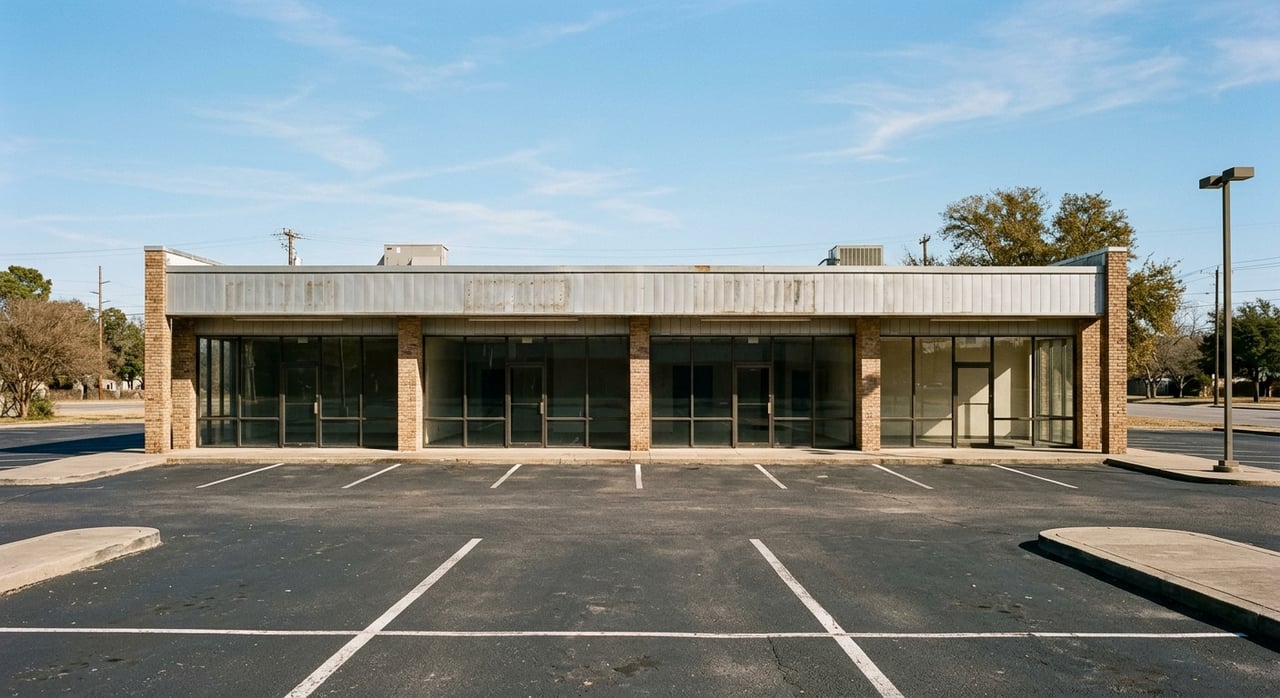
Opening a storefront in West Point can look simple on the surface. It is a compact market, and that means the right block can help your business while the wrong one can limit visibility, access, and growth. If you are weighing where to lease or buy space, this guide will help you match your business type to the parts of West Point that make the most sense. Let’s dive in.
Why location matters in West Point
West Point’s commercial footprint is small. The city’s comprehensive plan estimated that only 2.7% of local land was commercial, with most business activity concentrated in the Central Business District along US 45 Alternate and along Main Street.
That matters because storefront options are not spread evenly across town. In a compact market like West Point, your best site often depends less on finding any available space and more on finding the corridor that fits how your customers arrive, park, and shop.
West Point is also part of the Golden Triangle and serves as the Clay County seat, with a population of roughly 13,500. The city describes downtown as an old-fashioned Main Street environment, which gives certain businesses an advantage if they benefit from walk-in traffic, civic activity, and event spillover.
Best areas for a West Point storefront
Downtown and Main Street
If your business depends on charm, visibility to pedestrians, or a smaller street-front setting, downtown deserves a close look. The city’s commercial planning materials point to the Central Business District along US 45 Alternate between Mayhew Street and West Half Mile Street and along Main Street between Old White Road and Mulberry Street as the core commercial concentration.
This area is a logical fit for destination retail and service businesses. The city’s commercial examples include restaurants, banks, medical offices, law offices, and insurance offices, which also supports downtown as a practical match for other small-footprint service users.
Downtown also gets periodic boosts in activity from events. The Prairie Arts Festival is held downtown each year before Labor Day and draws more than 600 exhibits, creating added pedestrian and food traffic beyond normal daily demand.
For many small business owners, that combination matters. If you want a storefront that can benefit from character, visibility, and occasional event energy, downtown may be your strongest option.
US 45 Alternate and MS 50
If your business needs easy drive-up access, parking, and strong road visibility, focus on the major arterials. West Point’s transportation plan identifies US 45 Alternate as the main north-south arterial and MS 50 as the main east-west arterial.
The same plan says these corridors shaped development and that West Point has largely developed as an automobile-centric city. In practical terms, that makes these roads a better fit for concepts that rely on customers arriving by car rather than on foot.
These corridors are often the best match for uses such as restaurants, service retail, small offices, banks, and medical uses. If your business model depends on being seen quickly from the road and reached without much navigation, 45A and MS 50 should be high on your list.
Eshman Avenue and Dunlap
For neighborhood-serving businesses, Eshman Avenue near Dunlap is worth studying. The city’s comprehensive plan specifically identifies commercial strips on Eshman Avenue north and south of Dunlap.
This corridor may fit convenience-oriented tenants, small service businesses, and lower-intensity office users. If you want car access without some of the space constraints and historic review issues that can come with downtown properties, this area may offer a more flexible starting point.
For some operators, that can be the sweet spot. You may not need the event traffic of downtown or the major arterial exposure of 45A if your customers are more repeat, local, and service-driven.
How to match your business to the right corridor
Choosing the right area starts with how your business works day to day. A beautiful storefront is helpful, but layout, parking, access, and customer behavior usually matter more.
Here is a simple way to think about it:
| Business type | Best-fit area | Why it may work |
|---|---|---|
| Boutique retail or specialty shop | Downtown/Main Street | Better for walk-in traffic, civic activity, and street-front visibility |
| Restaurant or food concept | Downtown or 45A/MS 50 | Downtown can benefit from events; arterials can support drive-up convenience |
| Medical, office, or professional service | Downtown or 45A/MS 50 | Depends on whether you want character and centrality or parking and visibility |
| Convenience-oriented retail | Eshman/Dunlap or 45A corridors | Better fit for quick car access and neighborhood service demand |
| Small service business | Downtown, Eshman/Dunlap, or 45A | Best choice depends on signage, parking, and client visit patterns |
In West Point, there is no single best location for every business. The better question is which corridor supports how you plan to attract and serve customers.
Zoning can change the answer
Before you commit to a site, confirm the zoning. West Point divides commercial land into limited commercial, neighborhood commercial, community commercial, and regional commercial zones.
Each district is intended for a different level of commercial activity. Neighborhood commercial is meant for basic trade and personal services, while community and regional commercial districts are designed for broader customer draw and a wider range of commercial or professional uses.
That means two available properties may look similar but function very differently from an approval standpoint. A space that seems perfect for your use may still require review if the zoning does not line up cleanly with your business type.
Parking and access are major deal points
In a small city, it is easy to focus on rent and forget operations. But in West Point, parking and driveway rules can directly affect whether a site works for your customers.
The city requires off-street parking. It allows off-site parking in commercial zones only if it is within 600 feet, and it limits access to one driveway per 200 feet of frontage. A commercial driveway also cannot be closer than 40 feet to a street intersection.
Those rules matter if you expect steady customer turnover, delivery activity, or peak-hour demand. Parking areas also have landscaping and lighting requirements, and lots over 10 spaces and 3,500 square feet must include internal landscaped areas.
If you are comparing sites, ask yourself a few practical questions:
- Can customers enter and exit easily?
- Is there enough parking for my busiest times?
- Would shared or off-site parking actually work in real life?
- Is a new curb cut possible if the current access is awkward?
Signage and buildout need early attention
Your storefront is not just the suite. It is also the way people find you and recognize your brand from the street.
West Point regulates signage in commercial areas. Commercial real estate signs can be up to 32 square feet and 10 feet in height, and the city requires low-profile signs in commercial and industrial zones.
If you are planning renovations, timing matters too. Construction signs are allowed only within code limits during buildout, so you do not want to assume your pre-opening marketing plan can rely on oversized temporary signage.
This is one reason local transaction guidance matters. A site can check the box on rent and square footage but still create delays if signage, access, or layout needs are harder to solve than expected.
Downtown historic rules may affect your timeline
Downtown West Point can be appealing, but older commercial buildings often come with added review. The Downtown West Point Historic Preservation District requires new construction or remodeling to be compatible with the district’s existing architecture.
The city’s comprehensive plan also says a Certificate of Appropriateness is needed before construction, demolition, or alteration inside a historic district. That does not mean downtown is off limits. It means you should build preservation review into your timeline and budget from the start.
If your concept depends on a major facade change or a heavily altered interior-exterior setup, it is smart to confirm those details before signing a lease or closing on a purchase.
Questions to ask before you sign
A strong site decision usually comes down to due diligence. Before you move forward on any West Point storefront, make sure you get clear answers to the basics.
Ask your broker, landlord, or local contacts these questions:
- What is the exact zoning district?
- Is my business use permitted as of right?
- Will I need site plan review or conditional-use approval?
- How many parking spaces are required?
- Can shared or off-site parking be counted?
- Is a new curb cut or driveway change possible?
- Is the property inside the downtown historic preservation district?
- What signage is allowed at this site?
- What buildout limitations should I expect?
These are not small details. In many cases, they determine whether a site is workable long before you get to design and opening day.
Do not forget the city setup process
Once you choose a site, you still need to get operational. The city says every business operating inside West Point’s corporate limits needs a privilege license.
The city’s FAQs also say commercial or industrial utility accounts require a federal ID number, an authorization letter, and a deposit. Before utility service is set up, the property must also be inspected by the building inspector and fire marshal.
The minimum privilege-license fee is $20, with the exact amount based on business type, employee count, and inventory value. For food-related businesses, the city’s privilege tax application specifically reminds applicants to bring the health department permit.
Local relationships still matter
In West Point, site selection is not only about maps and zoning tables. The city identifies the Growth Alliance as its business development group, Main Street association, and chamber of commerce.
That makes local coordination part of the process. If you are trying to understand district context, introductions, or what type of business may fit a certain stretch of town, local relationships can give you useful insight that square footage alone cannot.
For many business owners, the best next step is working with a local brokerage that understands both the property side and the local process side. If you are exploring commercial property in West Point or anywhere in the Golden Triangle, Delta-Gulf Real Estate Corporation can help you compare sites, evaluate fit, and move forward with practical local guidance.
FAQs
Where is the best area for a small retail storefront in West Point?
- Downtown and Main Street are often the strongest fit for small-footprint retail that benefits from street-front visibility, walk-in traffic, and event activity.
What West Point corridor is best for a business that needs parking and easy road access?
- US 45 Alternate and MS 50 are usually the best places to start if your business depends on car access, visibility, and straightforward parking.
Is Eshman Avenue a good place for a West Point service business?
- It can be. The city identifies commercial strips near Eshman Avenue and Dunlap, which makes that area worth considering for neighborhood-serving retail, small services, and lower-intensity office uses.
What zoning questions should you ask before leasing a West Point storefront?
- You should confirm the exact zoning district, whether your use is allowed as of right, and whether the site may require site plan review or conditional-use approval.
Do downtown West Point storefronts have historic district rules?
- Some do. If a property is inside the Downtown West Point Historic Preservation District, construction, demolition, or exterior alteration may require a Certificate of Appropriateness.
Does every business in West Point need a privilege license?
- Yes. The city says every business operating inside West Point’s corporate limits must have a privilege license.
